Sep 22, 2026 12:26 PM
Hyde Park Jazz Fest on Chicago’s South Side to Present 20th Edition
The Hyde Park Jazz Festival will take place for the 20th time on the final weekend of September 2026. Beginning half…


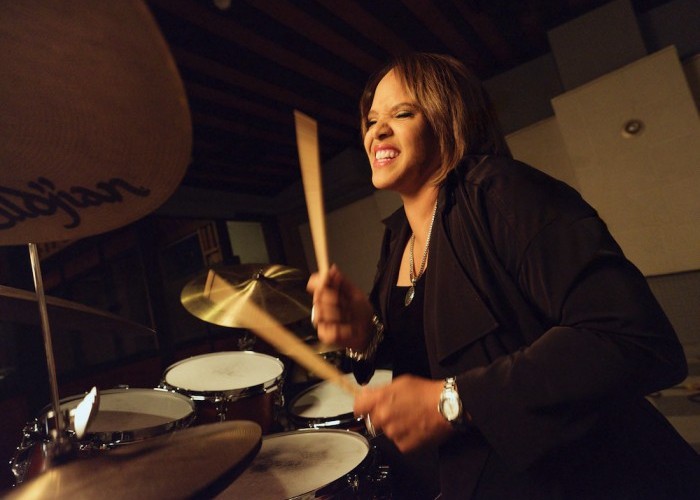
“There are plenty of guys who would vote for a woman president before hiring a woman in their band,” Terri Lyne Carrington said.
(Photo: Jimmy & Dena Katz)In 2016, the most recent year information was available from the National Center for Education Statistics, 56 percent of undergraduate students in the U.S. were women. According to the 2017–’18 Berklee Factbook, of the college’s 6,282 undergrads, 38 percent were female. Only “Male” and “Female” were listed as responses in each data set.
Through initiatives like the Institute of Jazz and Gender Justice, Berklee is trying to address the relative shortcomings of music institutions head-on, Carrington said. And she has firm ideas about how music organizations—both academic and professional—might follow suit.
First, assumptions about female musicians being inferior to male musicians or unable to play what traditionally have been perceived as male instruments have to stop. Female players should not have to be exceptional to be given the same opportunities granted to male players. To bring this about, music educators need to take a long, hard look at the messages they send to young female musicians, Carrington said.
“A large responsibility is with the band directors. A lot of them are problematic,” she opined, noting that bias among band directors shows up at the high school level, and even more critically, in middle schools, when children first are learning to play. “I’ve heard some pretty bad stories about band directors saying things like, ‘I’ve never met a good female jazz musician’ or ‘I’ve never played with a good one.’”
Even among those who “say the right things” about gender equity in music, the follow-through still can be lacking.
“I’ve said to some of these people, ‘When was the last time you mentored a woman? This is what I’m asking you to do: See some potential in a young woman and mentor her—whether in your opinion she’s as good as the guy next to her or not.’ Because you can’t just care about gender equity in other fields and not [in jazz]. And I do think that people care about gender equity. I also think that there are plenty of guys who would vote for a woman president before hiring a woman in their band.”
Finally, Carrington said, female jazz musicians are just as deserving of radio airplay, coverage in the press and grant money as male jazz musicians—and should receive it. The disparity both troubles and confounds her. “When you can drive for two hours and not hear one female musician on the radio, how do you not see something wrong with that?” she asked. “Music is an expression of life, and you can’t have life without women. If [life is] what we’re expressing, then women’s voices have to be part of that expression.”
Much of the institute’s corrective work will be to fill the holes in the jazz narrative where women’s voices should have been. The plan, according to institute managing director Wood, is to dig into jazz history to unearth information on the lives of female jazz musicians and build out the organization’s archive with both physical and online resources on these overlooked historical figures. In addition to documenting the lives of historical women in jazz, the archive also will chronicle the ongoing careers of living female jazz artists. Lastly, the library will catalog music by female jazz composers, a small, but sorely neglected, group of artists. “Almost every song that Geri Allen wrote should be a standard. She wrote amazing music,” Carrington said. “That’s just one example, and there are others.”
If all goes according to plan, within a few years the library at the Institute of Jazz and Gender Justice could be the most definitive archival resource on women in jazz in the world. “I don’t think that anything like this exists for women in jazz,” Carrington professed.
Within this environment, Carrington envisions a new classroom dynamic for all students, regardless of their gender or sexual identity (two different things, she emphasized). All students will take Wood’s class on “Jazz, Gender, and Society,” which will present the cornerstone teachings of the program. None of the ensembles will be male-dominated. Students from all disciplines—engineering, therapy, performance and more—will be welcome. And the institute’s classrooms will be spaces for musical experimentation “where you can learn how to play the music without having your guard up,” she avowed.
Carrington also hopes to create an educational program for young musicians to help redress systemic gender bias in middle schools and high schools. “We could make the curriculum ... feel more inclusive,” she said. “Maybe something along the lines of beginner’s books [as part of] an outreach that can be both local and, eventually, national.”
In the end, the institute will grant students the space to develop their musical identities, free from pressure to meet gender-based societal expectations—and through this process, perhaps, to develop ownership of the music in their own right.
“[The institute] is about freedom, searching for freedom within the constructs of society,” Carrington said. “Freedom is a big part of why I play—I’m the freest when I’m being creative and expressive. If I feel this way, I imagine that a lot of other people feel this way, too.”
That said, Carrington knows that gender equity is neither a passing trend nor an easy win. She grasps the magnitude of the challenge before her: “This is a journey for the rest of my life.”
So, the question remains: What would jazz without patriarchy sound like? Carrington looks to the future for the answer. DB
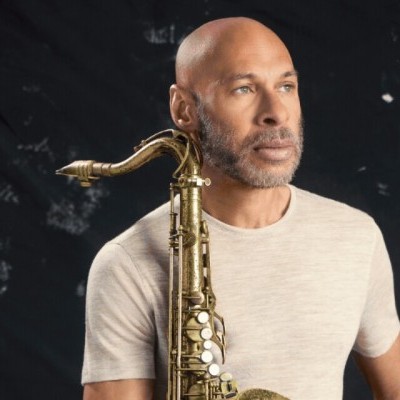
A solo concert by saxophonist Joshua Redman will close the first night of the Hyde Park Jazz Festival on Sept. 26.
Sep 22, 2026 12:26 PM
The Hyde Park Jazz Festival will take place for the 20th time on the final weekend of September 2026. Beginning half…
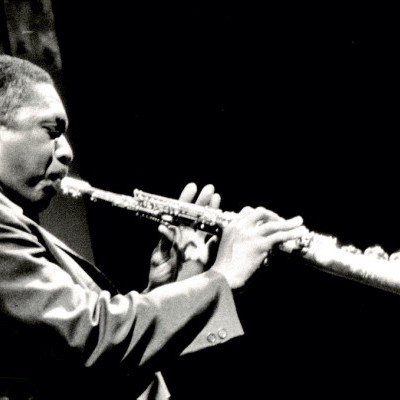
“It was just that suddenly … I could hear it,” Ravi Coltrane said of an epiphany he experienced during his late teens regarding his father’s music. “And it was almost like a calling, like something saying, ‘Hey, man, come on. It’s time to get serious.’ And the first time you really tune in and dial in and focus like that, it can be very life-changing.”
Sep 22, 2026 1:39 PM
Editor’s Note: Tomorrow, Sept. 23, is the 100th anniversary of John Coltrane’s birth. In honor of the tenor and…
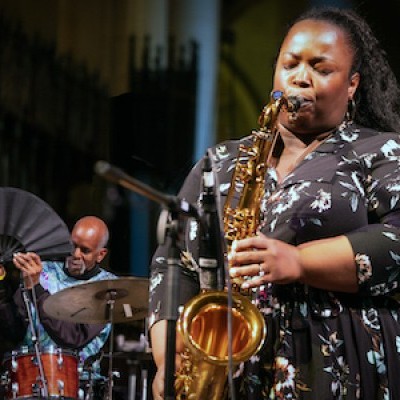
Camille Thurman took to the stage alongside bassist Kenny Davis and drummer Tommy Campbell for a rendition of Johnny Mercer’s “I’m An Old Cowhand” that recalled Rollins’ epochal 1957 trio outing Way Out West.
Oct 6, 2026 1:33 PM
As emcee Mark Ruffin noted at the commencement of an epic tribute to saxophonist Sonny Rollins at the Cathedral of Saint…
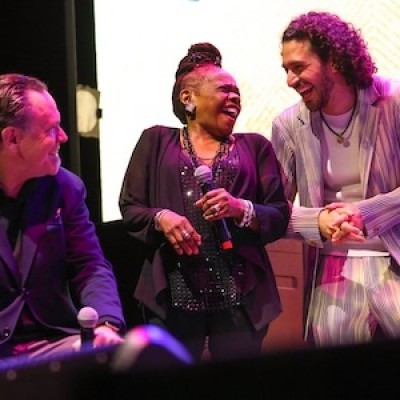
Kurt Elling, Katherine Russell and Emmet Cohen (host on the 2027 Jazz Cruise) share a laugh at sea.
Sep 8, 2026 11:52 AM
It began in 2001. A travel agent named Anita E. Berry had been booking clients on “partial” jazz cruises that took…
Sep 17, 2026 11:00 AM
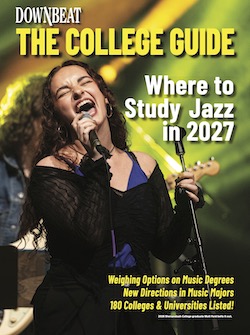
The 2027 DownBeat College Guide is an invaluable resource for music students, especially jazz students, to find a school…