Sep 22, 2026 12:26 PM
Hyde Park Jazz Fest on Chicago’s South Side to Present 20th Edition
The Hyde Park Jazz Festival will take place for the 20th time on the final weekend of September 2026. Beginning half…


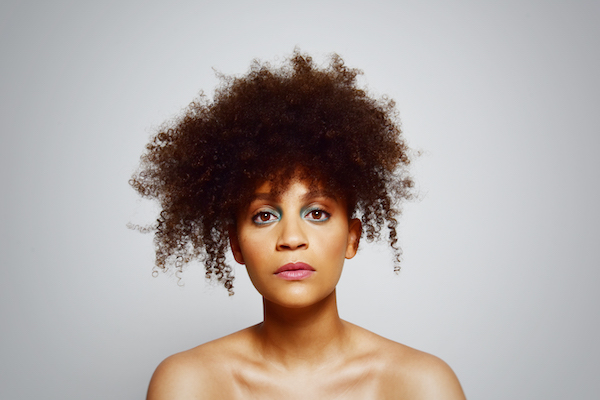
Vocalist Sarah Elizabeth Charles performs as a member of the group Ajoyo, as well as releasing music under her own name.
(Photo: Shervin Lainez)Sarah Elizabeth Charles’ heritage manifests itself in her music in ways that both surprise and delight her.
The vocalist and composer—now based in New York—grew up in Springfield, Massachusetts, the child of a Haitian father and a mother with French-Canadian roots. Charles’ most recent solo album—Free Of Form, which was co-produced by Christian Scott aTunde Adjuah—is a record imbued with electronic overtones and polyrhythms. But she’s also a vocalist with Ajoyo, a group led by reedist Yacine Boularès, and the band’s May release, War Chant, ranks as a heady jaunt through diasporic rhythms, all bolstered by Charles’ honeyed voice.
DownBeat had the opportunity to speak recently with Charles about Ajoyo’s new album, as well as connecting with her roots while cultivating an original voice.
The following has been edited for length and clarity.
Nate Chinen wrote a 2015 New York Times review of your album, Inner Dialogue, that really struck me. In it, he said, “There comes a point at which a singer-songwriter rooted in jazz faces the decision to leave the fold.” Do you think that’s true?
I remember reading that quote for the first time and thinking that there was a moment for me.
I grew up listening to and learning from the heroes of this music. My ultimate, on the vocal side of things, was Sarah Vaughan. I wanted to sing like her and to arrange like her. It wasn’t until I was in my late teens that songwriting really started to occupy a larger piece of my creative pie.
I was faced with a bit of a decision: Was I going to ground the beginnings of my career in standard repertoire? I had some people telling me that before I released any original music, I needed to release an album of standards.
I can say this now with hindsight: I chose to make the decision that felt truest to me. I had a few arrangements of standards on [my first album, Red], and I had arrangements with Haitian folkloric music. Then some original music and some very open, electronic improvisation-based music, too. The one consistent throughline was that all those things were encompassed within my creative identity.
Which seems so natural and begs the question: Why do new artists often feel they have to make that decision at all?
Some of the people who built this music are people who, when they were initially heard, were questioned [about] how they were expressing themselves. Because it was different. That’s how we have all these movements through Black American music, through original expression. Fast-forward 50 years, and these are the people that we hold up as being pillars, which is really remarkable—and helpful for me, because it helps me take a little pressure off myself.
I think I’m coming to a point in my career where I’ll arrange a bunch of standards and record them. I have something to say in relationship to that repertoire that I might not have had when I was 18 or even 25.
War Chant hits a lot of cultural touchpoints: drum machines alongside rhythms from Morocco, Cameroon and South Africa, respectively. But it doesn’t feel scattered at all. It feels like its own, very gelled thing.
Yacine’s come to lead the band in a way that feels extremely open. Every song that you hear on War Chant is something that we created together. It’s also a band that’s made up of humans who were born in different parts of this planet, coming at this music as diasporic members.
Coming from parents who aren’t from here, something will come out of me, and I wonder where it’s from. Those types of things can travel with us through generations. I’ll hear something and I’ll realize, “Oh, this feels like it comes from that kompa record that I listened to with my dad when we were cleaning the house that Sunday in 1994.”
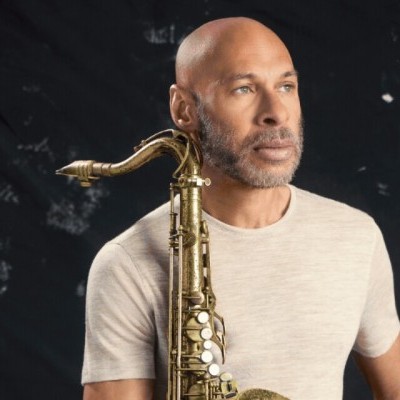
A solo concert by saxophonist Joshua Redman will close the first night of the Hyde Park Jazz Festival on Sept. 26.
Sep 22, 2026 12:26 PM
The Hyde Park Jazz Festival will take place for the 20th time on the final weekend of September 2026. Beginning half…
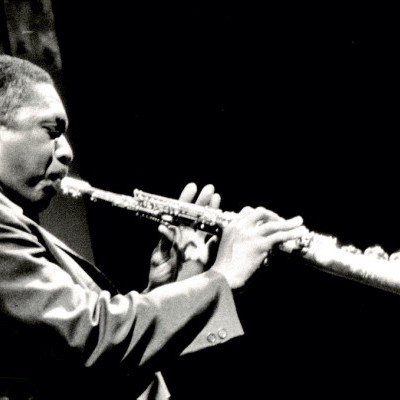
“It was just that suddenly … I could hear it,” Ravi Coltrane said of an epiphany he experienced during his late teens regarding his father’s music. “And it was almost like a calling, like something saying, ‘Hey, man, come on. It’s time to get serious.’ And the first time you really tune in and dial in and focus like that, it can be very life-changing.”
Sep 22, 2026 1:39 PM
Editor’s Note: Tomorrow, Sept. 23, is the 100th anniversary of John Coltrane’s birth. In honor of the tenor and…
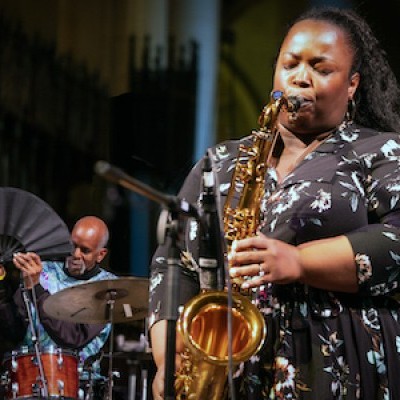
Camille Thurman took to the stage alongside bassist Kenny Davis and drummer Tommy Campbell for a rendition of Johnny Mercer’s “I’m An Old Cowhand” that recalled Rollins’ epochal 1957 trio outing Way Out West.
Oct 6, 2026 1:33 PM
As emcee Mark Ruffin noted at the commencement of an epic tribute to saxophonist Sonny Rollins at the Cathedral of Saint…
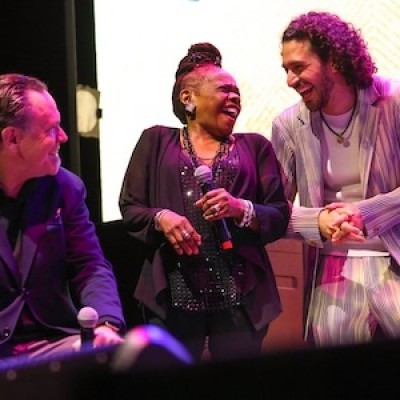
Kurt Elling, Katherine Russell and Emmet Cohen (host on the 2027 Jazz Cruise) share a laugh at sea.
Sep 8, 2026 11:52 AM
It began in 2001. A travel agent named Anita E. Berry had been booking clients on “partial” jazz cruises that took…
Sep 17, 2026 11:00 AM
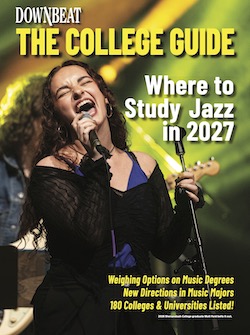
The 2027 DownBeat College Guide is an invaluable resource for music students, especially jazz students, to find a school…