Sep 22, 2026 12:26 PM
Hyde Park Jazz Fest on Chicago’s South Side to Present 20th Edition
The Hyde Park Jazz Festival will take place for the 20th time on the final weekend of September 2026. Beginning half…


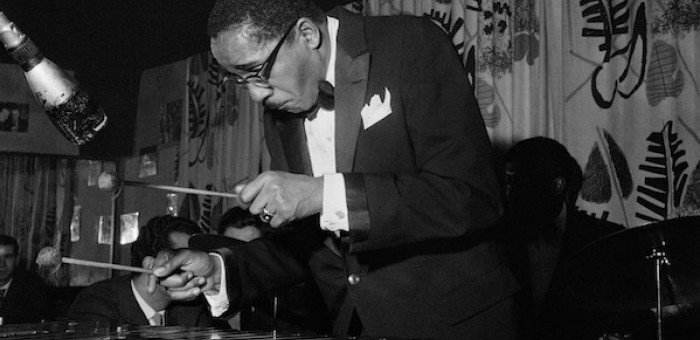
Milt Jackson is one of the many jazz icons Robert James Campbell photographed during his career.
(Photo: Robert James Campbell)Ferber took on the project, not knowing that the pursuit would eventually occupy a good portion of her life.
The homeless man’s name was Robert James Campbell. Though he lived and worked in New York City’s Greenwich Village circa 1960, Campbell (1936–2002) never became a big name among photojournalists. He shot jazz and folk musicians, street scenes and celebrity portraits. He also documented civil rights demonstrations and West Village life.
His images of jazz musicians—Dizzy Gillespie, Bud Powell, Philly Joe Jones, Gerry Mulligan, Lee Morgan, Miles Davis with John Coltrane—as well as folk and blues singers such as Son House, Mississippi John Hurt, Fred Neil and Richie Havens, were largely unknown until now.
Campbell sold a modest amount of photos to the Village Voice, DownBeat and some other publications, but at some point slipped into obscurity and onto the streets. Two people attended his funeral.
The 36-year old Ferber’s Rebirth of The Cool: Discovering the Art of Robert James Campbell (PowerHouse) will help rehabilitate the photographer’s standing. Ferber spoke to DownBeat from her home in Portland, Oregon, about her 14-year odyssey, wrestling with Campbell’s life and legacy.
DownBeat: The book was published in December. Have there been any developments since then?
Jessica Ferber: I’ve actually gotten a couple of people to come out of the woodwork. What I’ve learned is that there were so many layers to Bob [Campbell]. He was a very curious person and very adaptable. He designed furniture, he played the upright bass, and he read The New York Times every day beginning when he was a kid. He read a lot of Dickens and Mark Twain and had a lot of literature on Buckminster Fuller’s geodesic dome.
[We know that] Bob was absolutely floored when Charlie Parker died. Someone who knew him in college said Bob was the first person who ever taught him to dance.
In the book you’ve included a number of pictures of unidentified musicians.
There are many more images that Bob took, but the ones I selected were because I could positively identify them. I want to post unidentified images online and see if people can help with them.
Have you come to like Robert Campbell as a man?
Very much. When you spend enough time with someone’s personal belongings, you get close to the person. He had impeccable taste and he always seemed to know where the important things were happening. He was very involved in civil rights activism. The West Village was where Bob’s heart was; he was friends with Bob Dylan and he was very good friends with Fred Neil and Tim Buckley.
Have you come to recognize Campbell’s work as a gift to you?
For most of the time it didn’t feel like a gift; it was more like a large emotional burden. There were a lot of pitfalls along the way. The negatives were in terrible condition; really abused. A lot of them I haven’t rehabbed yet. I had to drive up to Vermont about 30 times to clear up legal problems connected with his estate.
It’s been really tough finding out the details of his life. I tried to get a book published in 2008 but no one wanted it—including PowerHouse Books.
It was so discouraging that I had to take a break from the project for four years—I had to walk away from it. After my Kickstarter campaign was completed in December of 2012, for the first time I thought the project was actually happening.
What was so compelling about Campbell’s images?
I had to do this. After seeing how many celebrated people he photographed and how good the images are, if I didn’t try to share them with the world I had the feeling that I would have failed Bob.
Back in the day, photographers gave their negatives to the publications they shot for, but Bob had lots and lots that he carried around. He suffered for his art until the day he died.
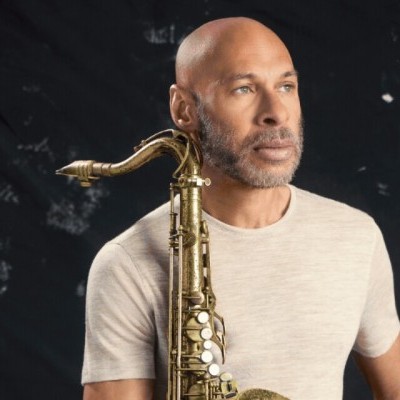
A solo concert by saxophonist Joshua Redman will close the first night of the Hyde Park Jazz Festival on Sept. 26.
Sep 22, 2026 12:26 PM
The Hyde Park Jazz Festival will take place for the 20th time on the final weekend of September 2026. Beginning half…
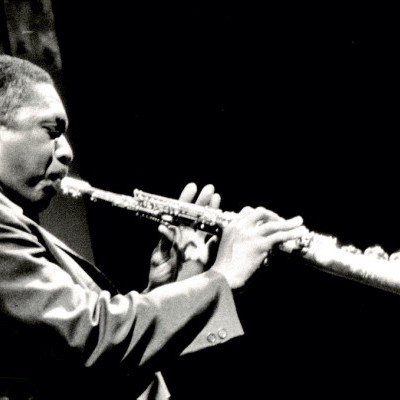
“It was just that suddenly … I could hear it,” Ravi Coltrane said of an epiphany he experienced during his late teens regarding his father’s music. “And it was almost like a calling, like something saying, ‘Hey, man, come on. It’s time to get serious.’ And the first time you really tune in and dial in and focus like that, it can be very life-changing.”
Sep 22, 2026 1:39 PM
Editor’s Note: Tomorrow, Sept. 23, is the 100th anniversary of John Coltrane’s birth. In honor of the tenor and…
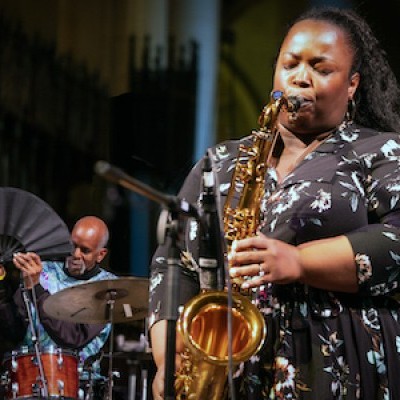
Camille Thurman took to the stage alongside bassist Kenny Davis and drummer Tommy Campbell for a rendition of Johnny Mercer’s “I’m An Old Cowhand” that recalled Rollins’ epochal 1957 trio outing Way Out West.
Oct 6, 2026 1:33 PM
As emcee Mark Ruffin noted at the commencement of an epic tribute to saxophonist Sonny Rollins at the Cathedral of Saint…
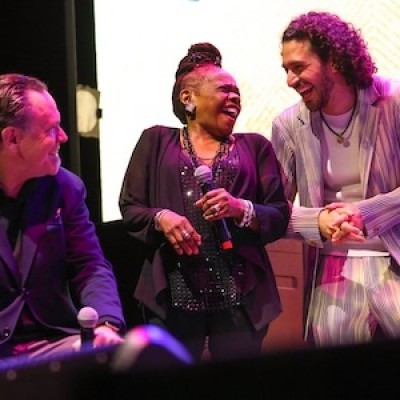
Kurt Elling, Katherine Russell and Emmet Cohen (host on the 2027 Jazz Cruise) share a laugh at sea.
Sep 8, 2026 11:52 AM
It began in 2001. A travel agent named Anita E. Berry had been booking clients on “partial” jazz cruises that took…
Sep 17, 2026 11:00 AM
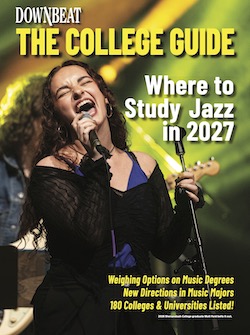
The 2027 DownBeat College Guide is an invaluable resource for music students, especially jazz students, to find a school…