Sep 22, 2026 12:26 PM
Hyde Park Jazz Fest on Chicago’s South Side to Present 20th Edition
The Hyde Park Jazz Festival will take place for the 20th time on the final weekend of September 2026. Beginning half…


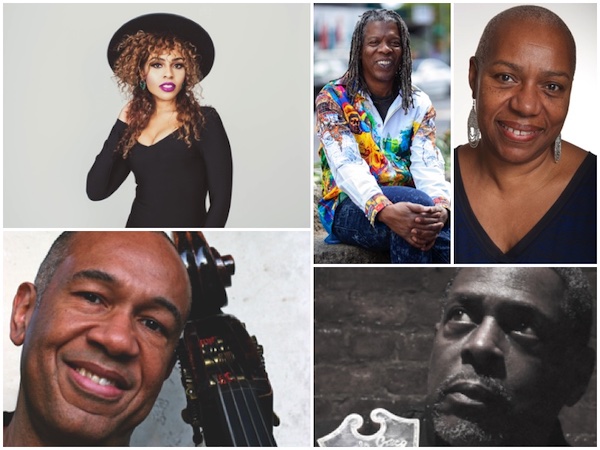
Vocalist Lauren Henderson (clockwise from top-left), broadcaster and journalist Mark Ruffin, manager Gail Boyd, venue-owner Gerry Eastman and bassist John Clayton recount some of their experiences in the jazzworld.
(Photo: Courtesy Of Artists)Though jazz is a genre shared and revered by people of all backgrounds, there’s no equivocating: The music is the sonic embodiment of the Black experience in America. As Louis Armstrong once said, “What we play is life.”
While people rise up all over the world in protest of George Floyd’s killing and the ubiquity of white supremacy, jazz remains a key expression of Black freedom, pain, beauty and community in a world that rarely offers generosity or justice to Black people. And yet, the realities of the jazz industry—particularly its institutionalization and attempts at commercialization—don’t always represent the form’s genesis.
DownBeat recently spoke with Black members in the industry—from label owners and DJs to jazz artists and managers—about how race has impacted their careers and what this moment might mean to the future of the jazzworld.
The following has been edited for length and clarity.
Gail Boyd: manager
In 30 years, I have known only a few Black record executives in jazz, only two of whom had final say in signing jazz artists. I know of only two Black jazz publicists. I know of only two Black jazz festival organizers. There are only a few Black jazz journalists. I don’t know any Black jazz booking agents. So, the business of jazz is predominantly run by white people—although, as I mentioned, it is a music created by Black people. And in jazz, African Americans do not make the kind of money you see white jazz musicians make.
One of the things I really hope comes about during this time, especially as it relates to Black jazz musicians, is that I would like to start some sort of movement to get more income from streaming for jazz performers. We have for too long accepted the theory that we don’t have to get advances anymore, so many artists are actually financing their own recordings, licensing them, and then buying them back after they’ve licensed them. And then they go make their money on the road and sell CDs. Since there are no Tower Records or retail facilities anymore, we’ve gotten used to the idea of making our money going out and performing.
When the pandemic hit, it was one big great realization that everyone is stuck with boxes and boxes of CDs and no place to sell them. Meanwhile, the streaming services and the record companies continue to make money during the pandemic because of their relationship with each other, regarding the payment of royalties to record companies—not to the artists. So, I would like to take this opportunity to show the unfairness of that and try to figure out a way to get an increase in royalty payments.
John Clayton: bassist
Race is something that I think every Black person is aware of and has to deal with, but for the most part, we don’t focus on it. If you have an imbalance of where your intention is directed, the next thing you know, the music suffers—and we’re doing this music because we love it. But I’ve [experienced racism] off and on throughout my life.
In the 1980s, I started playing in studios in Los Angeles, and I would play these big film dates, written by composers like Jerry Goldsmith and John Williams. It was not unusual for me to be the only Black person in a huge symphony-type orchestra of 50 musicians. And I know that there are musicians of color that would love to be in this environment, and they’re qualified—as qualified as anybody else. Those doors just were not open to them.
In jazz, at my age—knock on wood—I’m not running into diversity and inclusion roadblocks, obviously. I did experience them when I was younger, you know, not being allowed into an establishment because I was Black, even though I was going to play music. But [now], I see it more than I’m affected by it. I recognize it as something that maybe [my son] Gerald, or someone of his generation sees more than me.
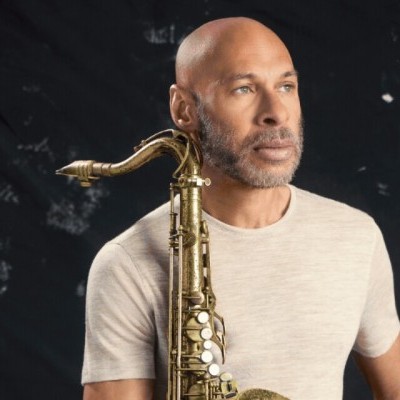
A solo concert by saxophonist Joshua Redman will close the first night of the Hyde Park Jazz Festival on Sept. 26.
Sep 22, 2026 12:26 PM
The Hyde Park Jazz Festival will take place for the 20th time on the final weekend of September 2026. Beginning half…
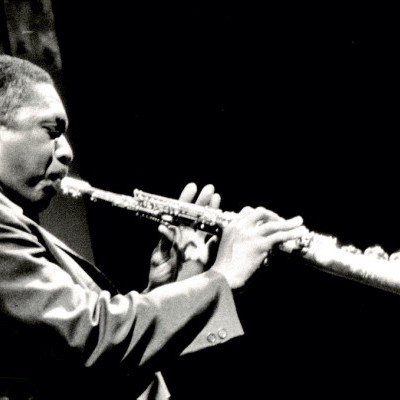
“It was just that suddenly … I could hear it,” Ravi Coltrane said of an epiphany he experienced during his late teens regarding his father’s music. “And it was almost like a calling, like something saying, ‘Hey, man, come on. It’s time to get serious.’ And the first time you really tune in and dial in and focus like that, it can be very life-changing.”
Sep 22, 2026 1:39 PM
Editor’s Note: Tomorrow, Sept. 23, is the 100th anniversary of John Coltrane’s birth. In honor of the tenor and…
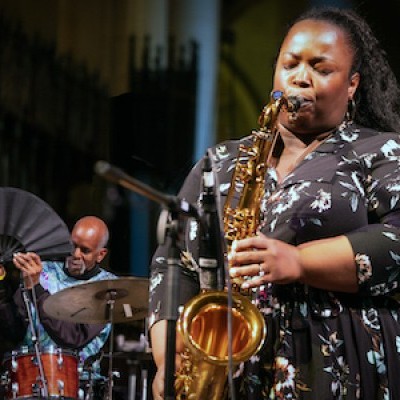
Camille Thurman took to the stage alongside bassist Kenny Davis and drummer Tommy Campbell for a rendition of Johnny Mercer’s “I’m An Old Cowhand” that recalled Rollins’ epochal 1957 trio outing Way Out West.
Oct 6, 2026 1:33 PM
As emcee Mark Ruffin noted at the commencement of an epic tribute to saxophonist Sonny Rollins at the Cathedral of Saint…
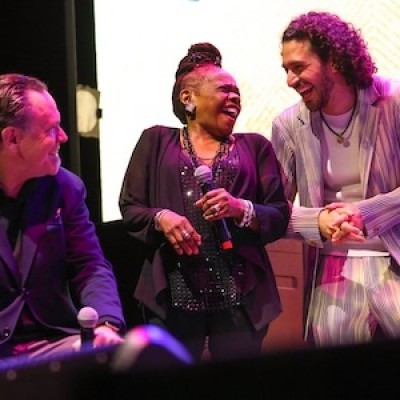
Kurt Elling, Katherine Russell and Emmet Cohen (host on the 2027 Jazz Cruise) share a laugh at sea.
Sep 8, 2026 11:52 AM
It began in 2001. A travel agent named Anita E. Berry had been booking clients on “partial” jazz cruises that took…
Sep 17, 2026 11:00 AM
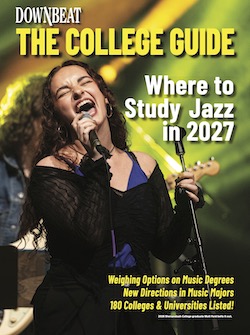
The 2027 DownBeat College Guide is an invaluable resource for music students, especially jazz students, to find a school…