Sep 22, 2026 12:26 PM
Hyde Park Jazz Fest on Chicago’s South Side to Present 20th Edition
The Hyde Park Jazz Festival will take place for the 20th time on the final weekend of September 2026. Beginning half…


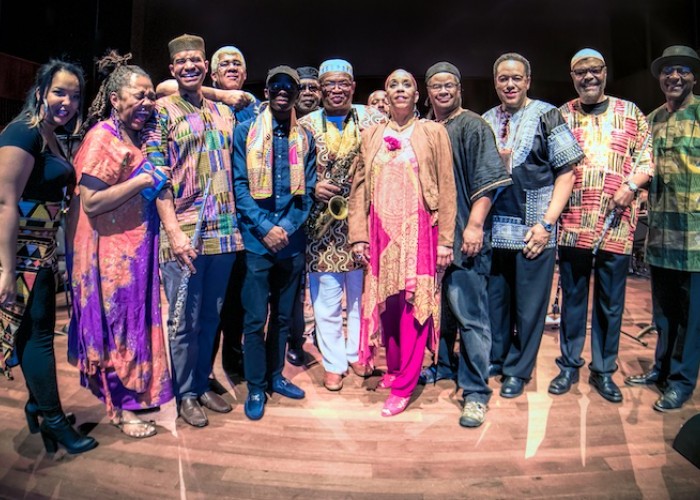
The AACM Great Black Music Ensemble is Alexis Lombre (left), Dee Alexander, Adam Zaonilni, Steve Berry, Frank Morrison, Ed House, Ernest Dawkins, Ben Lamar Gay, Maggie Brown, Darius Savage, Art Turk Burton, Taalib-Din Ziyad and Donovan Mixon.
(Photo: Michael Jackson)Chicago’s Association for the Advancement of Creative Musicians has been an inspirational leader within the music and cultural community since 1965.
In the spirit of the organization’s mission to showcase original compositions, the latest live recording of its performing group, AACM Great Black Music Ensemble: Live At The Currency Exchange Vol. 1, is a wonder-filled sampler fulfilling the ensemble’s calling.
Led by saxophonist Ernest Khabeer Dawkins, the AACM Great Black Music Ensemble brings together 10 works from that live session of improvised music, rife with the musical essence of the entire African diaspora, including funk, blues, bebop, and Caribbean beats and grooves. Ten performers participated, including Saalik Ziyad, the recording now also functioning as a tribute to the keyboardist/vocalist, who suddenly passed away earlier this year at the age of 40. His father, flutist/vocalist Taalib-Din Ziyad, also performed on the album.
Downbeat recently spoke with Dawkins about the live recording, conduction and being an occasional autocrat on the bandstand.
The following has been edited for length and clarity.
Can you tell me about what led up to recording the live album?
Nothing, nothing was planned; it’s all improvisational creative music. It’s all spontaneous composing. Everything was conduction.
Where I first saw conduction done was with Muhal Richard Abrams, the AACM experimental band, in the ’70s. So, it’s just a matter of signals, gestures, shapes. It first was used by AACM musicians, and Butch Morris is the one that codified it.
Since it’s all happening spontaneously, how does each song get composed?
With that process, I’m listening. And as I listen, then I tell or I inform the musicians what my general intentions are. I might sing a line, I might do something. And then, in terms of [the song] “Great Black Music,” we started the theme, and then we started the riff: “Great ... Black ... Music ... .”
So, it’s like a combination of improvisations being simultaneously put together, or interpretations of things being put together. And then I might tell one person, “Harmonize the part.” Nothing is predetermined.
And the resulting pieces end up being quite different from each other, each a unique gem.
That’s the idea. Or the pieces have different aesthetic sensibilities. So, if you let everything gravitate into one thing, then everything starts sounding the same. So, that’s my job as the conductor. I’m listening to the music, and I’m hearing it a certain way ... . I want those people to interpret it a certain way. ... Once I feel that they’re stepping over into another possibility, I try to reserve that possibility for a whole different section. So, then you get a variant of every composition, and then every composition does not sound the same.
At a certain point, you feel that something has ended or the transition is complete?
When you listen, the music will tell you when it’s complete.
So, these pieces will never be repeated again.
That’s the whole point: We can replicate what we do. But we don’t want to.
And how similar is the process to conducting an orchestra?
It’s similar, but it’s different. Because you’re creating on the spot, right? You don’t have a set score when you’re doing these improvisational sets, right? So, it’s really the concept and the creativity, and the expanse of the creativity is really in the hands of the musicians and the conductor.
Do you sometimes have to rein people in?
If they’re out of [the context of] what we’re doing? Definitely, that’s the conductor’s job: When someone’s straying, I bring them back. But, sometimes when someone’s straying, and they stray within a certain context, I say, let’s follow them. I’m listening to what the musicians do.
The process, it seems, is very democratic, even though there’s a conductor. But how much freedom do the musicians have?
It’s democratic and it’s also autocratic. There are no boundaries as to what it is. We tend to think that one way is the way. And one way is not the way. Sometimes, you need an autocratic dictator. And then sometimes, you need a democratic person.
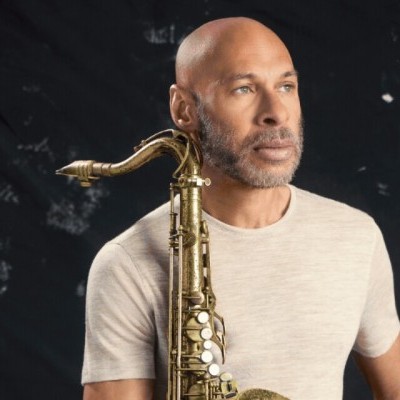
A solo concert by saxophonist Joshua Redman will close the first night of the Hyde Park Jazz Festival on Sept. 26.
Sep 22, 2026 12:26 PM
The Hyde Park Jazz Festival will take place for the 20th time on the final weekend of September 2026. Beginning half…
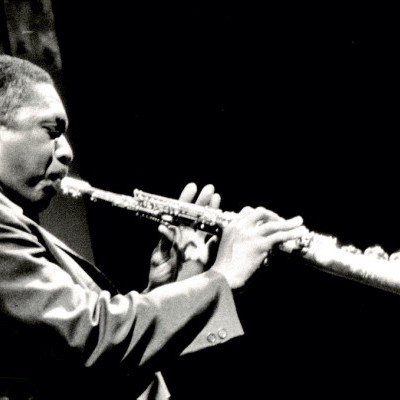
“It was just that suddenly … I could hear it,” Ravi Coltrane said of an epiphany he experienced during his late teens regarding his father’s music. “And it was almost like a calling, like something saying, ‘Hey, man, come on. It’s time to get serious.’ And the first time you really tune in and dial in and focus like that, it can be very life-changing.”
Sep 22, 2026 1:39 PM
Editor’s Note: Tomorrow, Sept. 23, is the 100th anniversary of John Coltrane’s birth. In honor of the tenor and…
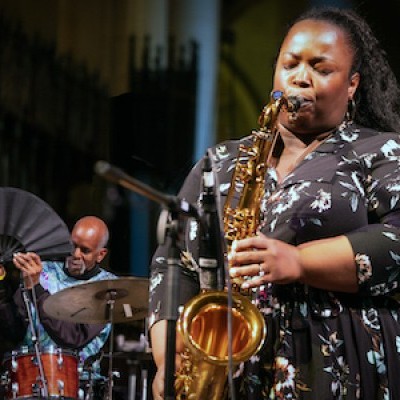
Camille Thurman took to the stage alongside bassist Kenny Davis and drummer Tommy Campbell for a rendition of Johnny Mercer’s “I’m An Old Cowhand” that recalled Rollins’ epochal 1957 trio outing Way Out West.
Oct 6, 2026 1:33 PM
As emcee Mark Ruffin noted at the commencement of an epic tribute to saxophonist Sonny Rollins at the Cathedral of Saint…
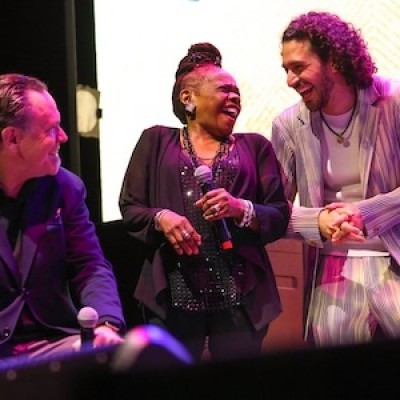
Kurt Elling, Katherine Russell and Emmet Cohen (host on the 2027 Jazz Cruise) share a laugh at sea.
Sep 8, 2026 11:52 AM
It began in 2001. A travel agent named Anita E. Berry had been booking clients on “partial” jazz cruises that took…
Sep 17, 2026 11:00 AM
The 2027 DownBeat College Guide is an invaluable resource for music students, especially jazz students, to find a school…