Sep 22, 2026 12:26 PM
Hyde Park Jazz Fest on Chicago’s South Side to Present 20th Edition
The Hyde Park Jazz Festival will take place for the 20th time on the final weekend of September 2026. Beginning half…


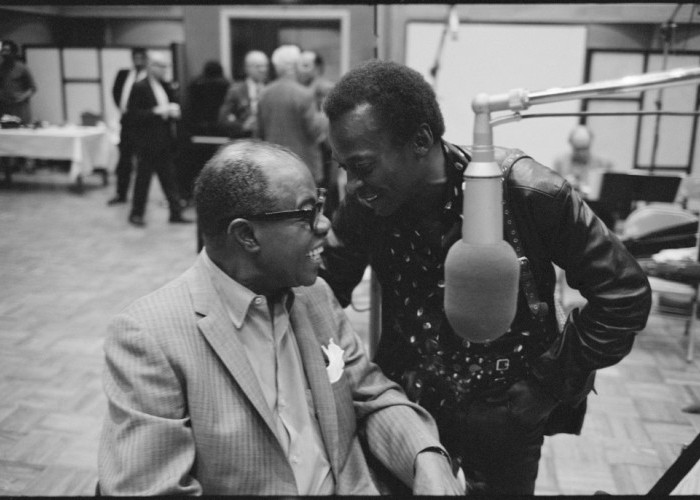
Photographer Jack Bradley captured intimate moments of Louis Armstrong’s life between 1959 and 1971, the year of his death. Here, Armstrong (left) laughs with Miles Davis.
(Photo: Courtesy Jack Bradley/Louis Armstrong House Museum)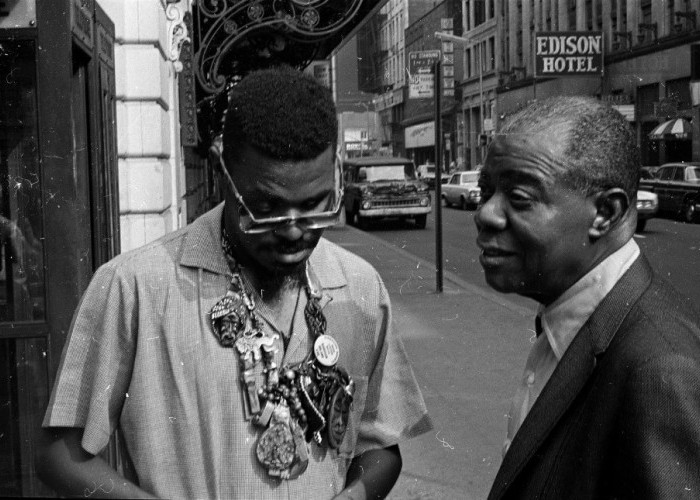
Photographer Jack Bradley captured intimate moments of Louis Armstrong’s life between 1959 and 1971, the year of his death. Here, Armstrong is shown with Rahsaan Roland Kirk (left).
(Photo: Courtesy Jack Bradley/Louis Armstrong House Museum)For about two years, the Louis Armstrong House Museum in Queens, New York, has been translating thousands of physical artifacts into a digital archive. And now, it’s live.
The initiative began three years ago when philanthropist Robert F. Smith contacted the museum directly, opening a dialog with Ricky Riccardi, director of research collections, about preserving African American history—specifically, the value of creating a digital archive that would offer a direct portal into Louis Armstrong’s daily life, from day-to-day audio recordings to methodically crafted scrapbooks.
In 2016, the museum applied for a grant through Smith’s Fund II Foundation and received a $3 million allocation, with $2.7 million going toward the complete digitization of the collections. The remaining $300,000 would facilitate the hiring of two full-time museum fellows from historically black colleges and universities, who would work alongside Riccardi, Research Collections Manager Sarah Rose and a small but mighty legion of interns, approving each artifact and creating individual metadata entries for each item.
“It’s just a blur,” Riccardi said about the process. “But I’m happy to report, the digitization is complete.”
Of those thousands of now-digitized artifacts, perhaps most compelling is the visual story of Armstrong’s life, told in scattered sequence, one photograph at a time.
When Armstrong died in 1971, he and his wife, Lucille, had amassed a staggering collection of personal effects, including more than 5,000 photographs stacked throughout their Corona, New York, home. To translate these images, and the thousands of others the museum would collect over the years, Riccardi and his team contracted with Deluxe MediaRecall, a digitizing service, which sent a husband-and-wife team to Queens for the duration of the project.
Five days a week for eight months, John and Dariene Dopp’s routine rarely varied: At 7:30 a.m., they’d receive a truck filled with artifacts that they’d take to a room at the Queens College library and begin digitizing the items. “They had all their own equipment,” Riccardi said. “A camera setup, a flatbed scanner setup, a cradle of film or negatives setup—and they just went to work.”
The duo worked up all the museum’s visual artifacts, including countless negatives across multiple collections that span Armstrong’s Corona years from 1943 until his death. Currently, among the archive’s photo-heavy stockpile are The Ernie Anderson Collection (1940s–1950s), The Louis Armstrong Collection (1940–1965), The Phoebe Jacobs Collection (1970s–1980s) and the museum’s crown jewel of aperture, The Jack Bradley Collection.
“Jack has become the world’s foremost authority on all things Armstrong,” Riccardi said.
The Louis Armstrong Educational Foundation gifted the museum Bradley’s collection in 2005, but the relationship between photographer and artist dates back to 1959. “They became so close that Louis referred to Jack as his ‘white son,’” Riccardi said. A promising photographer, Bradley earned unprecedented access to Armstrong as a result of their easy camaraderie. “Louis would tell him, ‘Hey, I’m recording today,’ or ‘The band’s rehearsing today,’ or, ‘I need to do an interview, why don’t you come down?’ And Jack would be there with his camera.”
Bradley’s collection included more than 5,000 negatives snapped between 1959 and 1971, allowing the museum to depict a deeply personal narrative, spanning the final decade of Armstrong’s life. His quick-draw captured images of Armstrong on stage, at home, on the road and on the bus. Highlights include Armstrong and Dave Brubeck recording The Real Ambassadors in 1962, Quincy Jones with Pops in the studio, Miles Davis making a similar visit to another session and Armstrong walking the streets of Manhattan with Rahsaan Roland Kirk.
“There are photos of people I’ve never seen before that Jack’s camera captured,” Riccardi said. “Through Jack’s collection, you can really chart those last 12 years.”
The impact of such an initiative resonates with many artists who feel connected to Armstrong and who seek to foster that sort of link in subsequent generations. Trumpeter and composer Terell Stafford has been working as director of jazz studies and chairperson of instrumental studies at Temple University for the past 22 years. This summer, he played the museum with his quintet and recently said that creating digital access to the photography collection is critical to fully understand who Armstrong was.
“[The format] brought the whole archive to life,” Stafford said. “[To be able to access] the digital archive reminds me of what a humanitarian and what a great human being he was. In the photos, you see the happiness, you see the joy—I find the digitized archive to be really touching.”
Stafford went on to say that experiencing the breadth of Armstrong’s life in pictures also will help curious minds gain a clearer understanding of the artist as a mentor: “Clark Terry once said to me, ‘Dizzy and I would go over to Louis Armstrong’s house and we’d get our batteries charged.’ He embraced and encouraged the younger generation.”
Anyone can access the photo collection, as well as the complete archive, here.
“It’s just inspiring,” Stafford continued. “With [Armstrong], learning and growing is timeless.” DB
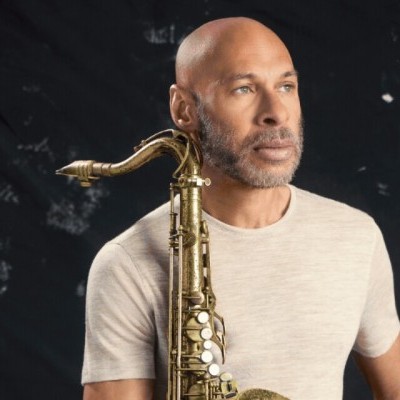
A solo concert by saxophonist Joshua Redman will close the first night of the Hyde Park Jazz Festival on Sept. 26.
Sep 22, 2026 12:26 PM
The Hyde Park Jazz Festival will take place for the 20th time on the final weekend of September 2026. Beginning half…
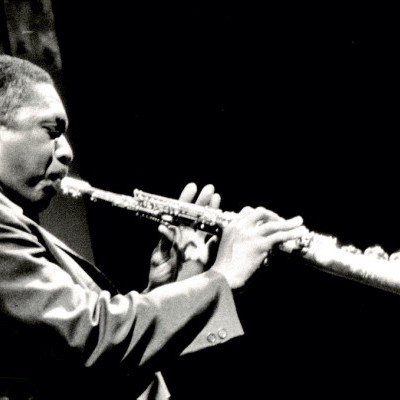
“It was just that suddenly … I could hear it,” Ravi Coltrane said of an epiphany he experienced during his late teens regarding his father’s music. “And it was almost like a calling, like something saying, ‘Hey, man, come on. It’s time to get serious.’ And the first time you really tune in and dial in and focus like that, it can be very life-changing.”
Sep 22, 2026 1:39 PM
Editor’s Note: Tomorrow, Sept. 23, is the 100th anniversary of John Coltrane’s birth. In honor of the tenor and…
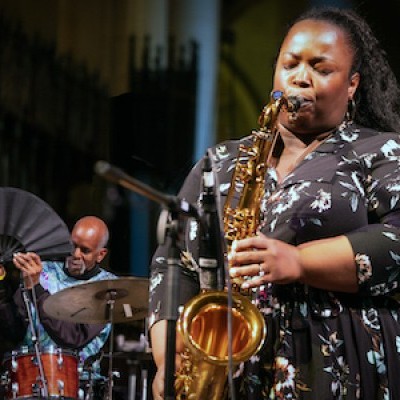
Camille Thurman took to the stage alongside bassist Kenny Davis and drummer Tommy Campbell for a rendition of Johnny Mercer’s “I’m An Old Cowhand” that recalled Rollins’ epochal 1957 trio outing Way Out West.
Oct 6, 2026 1:33 PM
As emcee Mark Ruffin noted at the commencement of an epic tribute to saxophonist Sonny Rollins at the Cathedral of Saint…
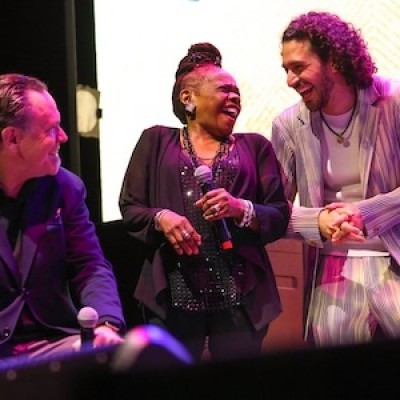
Kurt Elling, Katherine Russell and Emmet Cohen (host on the 2027 Jazz Cruise) share a laugh at sea.
Sep 8, 2026 11:52 AM
It began in 2001. A travel agent named Anita E. Berry had been booking clients on “partial” jazz cruises that took…
Sep 17, 2026 11:00 AM
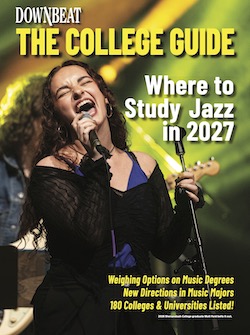
The 2027 DownBeat College Guide is an invaluable resource for music students, especially jazz students, to find a school…